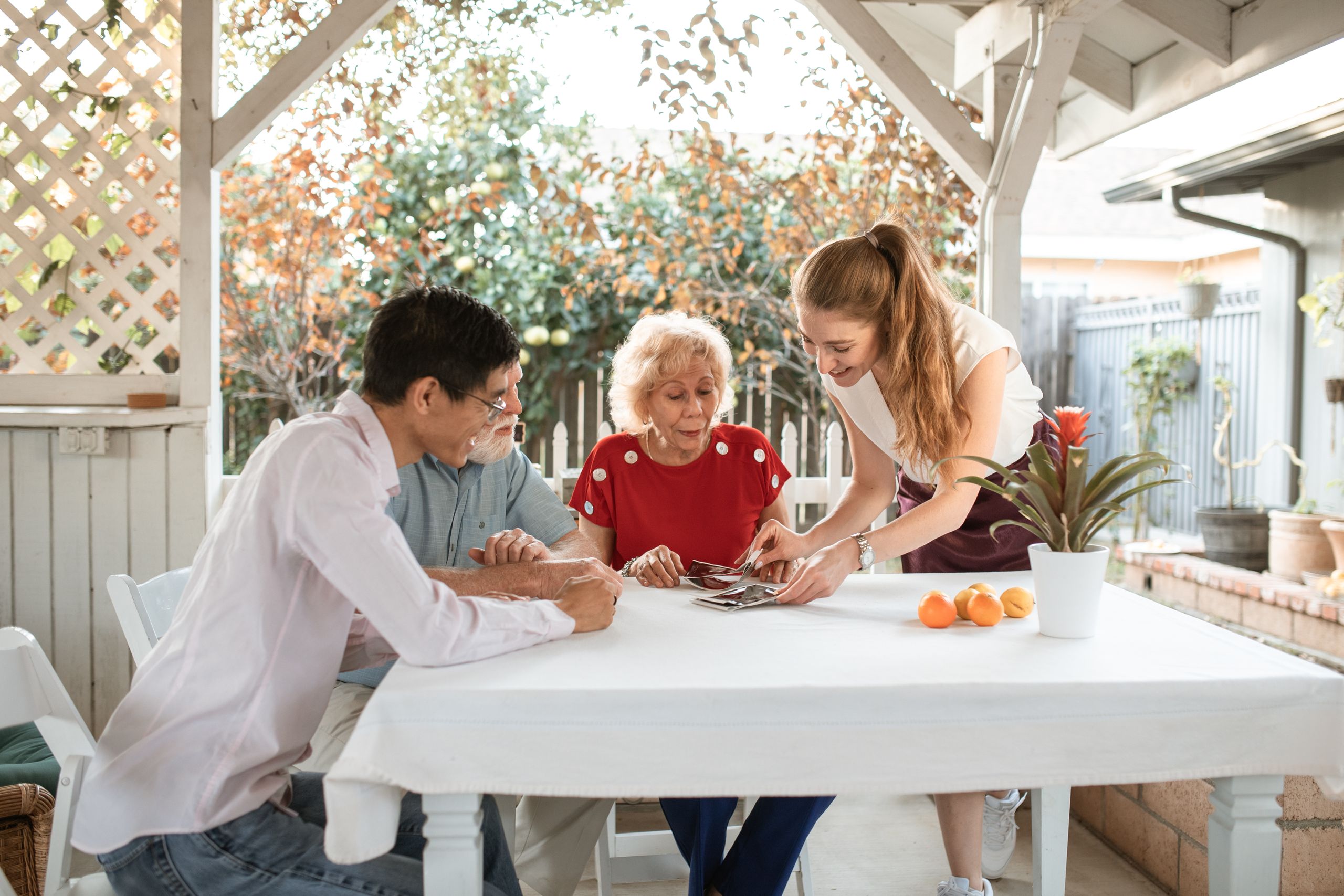
When a parent or spouse starts showing signs of memory loss, families are often thrown into a search they never expected to make. Should they consider a large memory care community? A skilled nursing facility? Or is there a smaller, more personal option that still provides the level of care their loved one needs?
For many families, the answer is a residential care facility for the elderly (RCFE), often called a board and care home. These licensed homes offer an alternative to large institutional settings, and for many people living with dementia, that difference matters more than families realize at first.
What Dementia Care Actually Requires
Dementia is not a single condition. It’s a general term for a decline in memory, thinking, and reasoning that interferes with daily life, and it includes Alzheimer’s disease along with several other related conditions. As it progresses, people often need more than just medical supervision. They need consistency, familiarity, and caregivers who know them well enough to notice small changes before they become big problems.
That kind of attentive, individualized care is difficult to deliver at scale. In a facility with dozens or hundreds of residents, staff turnover and large caregiver-to-resident ratios can make it hard for any one caregiver to really know a resident’s baseline behavior, preferences, and triggers.
Why the Board and Care Model Fits Memory Care So Well
A board and care home is typically a licensed residential home serving a small number of residents, often somewhere between six and a dozen or so, depending on the license. That small size changes everything about how dementia care actually works day to day.
Lower caregiver-to-resident ratios. With fewer residents in the home, caregivers can spend real time with each person. That matters enormously for someone with dementia, who may need extra time to communicate, extra patience during meals, or extra reassurance during moments of confusion or agitation.
A genuinely home-like environment. Board and care homes are actual houses in residential neighborhoods, not clinical buildings. For someone with dementia, a familiar, home-style setting, complete with a regular kitchen, living room, and yard, can reduce the disorientation and anxiety that institutional environments often trigger.
Consistent routines and consistent faces. Because the caregiver team is small and stable, residents see the same people day after day. Consistency is one of the most protective factors for someone living with dementia, since routine and familiarity can ease agitation and support a sense of security.
Personalized care plans. Every resident’s dementia journey looks different. In a small home setting, caregivers can tailor daily routines, meals, and activities to the individual rather than applying a one-size-fits-all schedule designed for a much larger population.
What to Look for in a Memory Care Home
If you’re touring board and care homes for a loved one with dementia, here are a few things worth asking about directly:
- Staff training. Ask how caregivers are trained specifically in dementia care, including how they’re taught to de-escalate confusion or agitation without relying on unnecessary restraints or medication.
- Licensing. In California, RCFEs are licensed and regulated under Title 22, which sets requirements for staffing, safety, and care standards. Ask to see the current license and inquire about any past citations.
- Safety features. Homes serving residents with dementia should have safeguards in place for wandering, along with a layout that’s easy to navigate.
- Staff-to-resident ratio, especially at night. Nighttime wandering and confusion are common with dementia, so it’s worth asking specifically how staffing works overnight, not just during the day.
- How the home handles changing needs. Dementia progresses over time. Ask how the home adjusts care plans as needs increase, and what circumstances would require a resident to move to a higher level of care.
- Family communication. Ask how often you’ll hear from caregivers and administrators, and how they handle updates when something changes.
Our Honest Answer to These Questions
Genesis Manor homes are not locked or secured memory care units, and we do not staff awake overnight caregivers. A caregiver lives on site around the clock, seven days a week, and responds to emergencies at any hour, but nighttime supervision is on call rather than continuous.
We will tell you honestly which category your parent is in, even when the answer is that we cannot help. We would rather point you somewhere better than take a placement that will not work.
That makes us a strong fit for a resident in early to middle stage dementia who is not an active elopement risk. It makes us the wrong fit for someone who wanders at night or needs continuous overnight monitoring.
The Genesis Manor Approach
Genesis Manor has operated licensed residential care homes across the Inland Empire since 1999, and dementia care has been part of that work from the beginning. Our homes are true residential houses in Rancho Cucamonga, Claremont, and La Verne, each licensed and each staffed with caregivers who get to know residents as individuals, not case numbers.
Because our homes are small, families get the benefits that matter most in dementia care: attentive staff, a familiar setting, and administrators who are personally involved and easy to reach. Genesis Manor accepts both Medi-Cal and VA benefits, which helps make quality memory care accessible to more families in our community.
Choosing the Right Setting for Someone You Love
There’s no single right answer for every family, and the right setting depends on the person, their stage of dementia, and what kind of environment helps them feel most like themselves. For many families, though, a smaller, home-based setting offers something a larger facility simply can’t: the feeling that their loved one is still living in a home, surrounded by people who know them, rather than being managed in a facility. Read our stage-by-stage assessment.
If you’re weighing your options for a parent or spouse with dementia, we’d welcome the chance to talk with you about what care looks like in one of our homes. All the care. Still feels like home. Compare our five homes side by side.
More guides for families are in our resource library.
Where a Six-Resident Home Fits, by Stage
Which stage your parent is in changes the answer, and we have written that out honestly, including the two situations where we will tell you no.
If you would rather just talk it through, call. We ask about memory, mobility, medications, and how nights are going, and we tell you on the first call whether we are the right home.